Amazing Limited Time Offer !
Call : +91 7771811100, +91 7771811104
Accurate Surveying and Construction



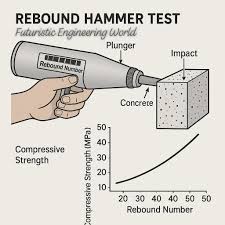
Rebound Hammer Test Survey Service in Kanpur provides a quick and non-destructive method for assessing the surface hardness and uniformity of hardened concrete. The testing supports structural inspections, quality assessment, maintenance planning, and concrete condition evaluation.
Not every concrete assessment requires coring, drilling, or lengthy lab procedures. Sometimes, engineers simply need a fast, reliable indication of surface hardness and relative strength across a structure—precisely what a professional Rebound Hammer Test Survey Service in Kanpur provides. Quick to perform and completely non-destructive, this test has become a go-to first step in concrete quality assessment for residential, commercial, and industrial projects.
At Accurate Surveying and Construction, our experienced civil engineers have delivered accurate geotechnical and non-destructive testing services across India for years. Our Rebound Hammer Test Survey Service in Kanpur offers contractors, consultants, and building owners a fast, dependable way to screen concrete quality and identify areas needing further investigation.
Also known as the Schmidt Hammer Test, this non-destructive method estimates the surface hardness and relative compressive strength of concrete. A spring-loaded plunger is pressed against the concrete surface and released, striking an internal mass that rebounds a distance based on the surface hardness.
The rebound number is recorded and converted into an estimated compressive strength using standard correlation charts. Harder, denser, and well-cured concrete produces a higher rebound number than weaker or poorly compacted concrete. This mechanical response gives engineers a quick, comparative picture of concrete quality across a structure, making the Rebound Hammer Test a valuable first step in prioritizing deeper investigations.
Kanpur’s industrial heritage, combined with its mix of older buildings, leather and textile processing units, and expanding residential developments, presents a wide range of concrete quality. Many structures were built decades ago under varying standards, while newer projects require ongoing quality checks.
A locally experienced Rebound Hammer Test Survey Service in Kanpur understands these diverse conditions—from aging industrial structures to modern high-rises—and interprets rebound readings with the appropriate context. This expertise ensures test results lead to meaningful, actionable insights.
The typical testing procedure includes these key stages:
Site Inspection
Technicians assess the concrete element to identify suitable test areas based on the structural member, surface condition, accessibility, and project requirements.
Surface Preparation
The concrete surface must be clean, stable, and free from loose material, coatings, plaster, or any conditions that could affect readings.
Equipment Verification
The rebound hammer is checked for proper condition and calibration to ensure reliable measurements.
Test Impact
The technician positions the instrument correctly against the concrete surface and applies a controlled impact. The hammer mechanism generates the impact and records the rebound response.
Multiple Measurements
Multiple impacts are made across the test area to capture local variations and ensure a representative assessment.
Data Recording
Rebound values, test locations, structural member details, surface conditions, and relevant observations are documented.
Result Analysis
Engineers review the readings, evaluate variations, and compare results with project data or standard correlations as needed.
Technical Reporting
The final report includes test methodology, locations, readings, observations, and conclusions.
Kanpur’s diverse development sectors benefit from rebound hammer testing in:
Rebound values can be influenced by:
Because of these factors, rebound numbers should not be interpreted as direct measures of compressive strength without proper context and correlation with other methods.
A detailed test report enhances the value of the results by including:
Clear, comprehensive reporting allows engineers to compare structural zones effectively and decide where further investigation is necessary.
Real estate developers, industrial facility owners, structural consultants, and government agencies across Kanpur depend on rebound hammer testing as a routine first step in concrete quality assessment. Kanpur’s leather processing zones, textile manufacturing units, and expanding residential developments frequently require this testing to screen structural conditions before deciding on more detailed investigations.
Sometimes, the most valuable testing is the kind that provides fast, reliable answers without disrupting a structure. A trusted Rebound Hammer Test Survey Service in Kanpur offers exactly that—giving engineers, contractors, and building owners a quick, dependable read on concrete quality to support smarter decisions about where to focus further attention.
At Accurate Surveying and Construction, our commitment to accuracy, efficiency, and client satisfaction has made us a dependable partner for non-destructive testing projects across India. If your structure needs a fast concrete quality check, connect with our team for a reliable Rebound Hammer Test Survey Service in Kanpur and get clear answers without delay.
Need reliable concrete quality assessment in Kanpur?
Choose a professional Rebound Hammer Test Survey Service in Kanpur for systematic field testing, accurate rebound measurements, technical evaluation, and detailed reporting. Contact an experienced concrete testing and surveying team today to discuss your project requirements.
Rebound Hammer Test Survey Service in Kanpur provides a quick and non-destructive method for assessing the surface hardness and uniformity of hardened concrete. The testing supports structural inspections, quality assessment, maintenance planning, and concrete condition evaluation.