Amazing Limited Time Offer !
Call : +91 7771811100, +91 7771811104
Accurate Surveying and Construction


Odisha is experiencing rapid growth across infrastructure, urban development, and industrial sectors. From highways and railways to smart city projects and mining operations, the state’s construction landscape requires precise, non-invasive methods to uncover underground conditions before excavation begins. A Ground Penetrating Radar (GPR) Survey in Odisha plays a vital role in helping engineers, contractors, and government agencies detect underground utilities, voids, and structural anomalies—without causing damage to existing infrastructure.
In this blog, we will explore what GPR surveys are, why they are crucial for Odisha’s expanding infrastructure sector, and how professional GPR services can benefit projects in the region.
What Is Ground Penetrating Radar?
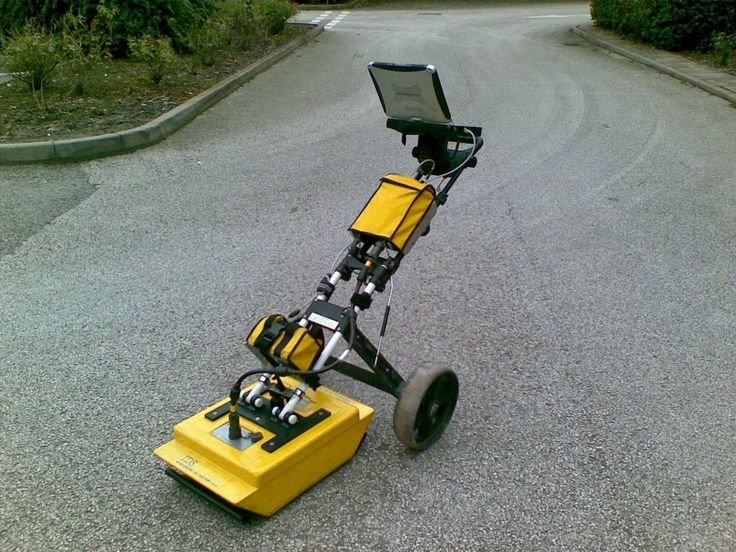
Ground Penetrating Radar (GPR) is a geophysical investigation technique that uses electromagnetic radar signals to examine materials beneath the surface. The equipment sends radar waves into the ground or structures, which reflect back when they encounter changes in material or subsurface objects. Experts analyze these reflections to identify potential underground features.
Unlike traditional excavation, GPR does not require extensive digging, making it ideal for obtaining subsurface information while minimizing disturbance to existing surfaces.
Odisha is witnessing growth across construction, industrial, transportation, mining, commercial, and infrastructure sectors. These projects often face complex underground conditions involving:
A Ground Penetrating Radar Survey in Odisha provides valuable preliminary insights before excavation begins, enabling engineers and contractors to plan more effectively and pinpoint areas needing further investigation.
Key reasons to consider GPR include:
Underground Utility Mapping
GPR helps locate pipes, cables, and ducts before excavation, preventing accidental damage and ensuring smoother project execution for utility companies and construction firms.
Road and Pavement Assessment
GPR assesses pavement thickness, detects voids, and identifies weak spots beneath roads, aiding highway maintenance and infrastructure longevity.
Structural Investigation of Buildings and Bridges
For older and heritage structures, GPR detects rebar corrosion, voids, cracks, and moisture intrusion without surface damage, supporting structural health assessments.
Mining and Geological Studies
GPR assists in mapping subsurface formations, void detection, and ore boundary identification, promoting safer and efficient mining operations in Odisha’s mineral-rich regions.
Archaeological and Heritage Site Exploration
Non-destructive GPR surveys enable exploration of buried structures and artifacts, preserving the integrity of Odisha’s cultural and historical sites.
These advantages make GPR surveys increasingly popular among organizations in Odisha for supporting infrastructure and development projects.
GPR technology supports diverse projects across Odisha, including:
Cities and industrial zones with high construction activity particularly benefit from systematic subsurface investigation using GPR.
Excavation can be complicated by uncertain underground conditions, such as cables, pipes, foundations, or buried objects—even in small projects.
A Ground Penetrating Radar Survey in Odisha provides vital information before excavation, allowing teams to identify critical areas instead of relying only on assumptions or outdated drawings.
Important: GPR is not a complete replacement for all investigation methods. Factors like site conditions, material properties, depth, moisture, and underground object characteristics affect radar effectiveness. Professional interpretation and complementary investigations remain essential.
The accuracy of subsurface investigations depends on the right equipment, systematic fieldwork, and expert data interpretation.
ASurvey offers specialized surveying solutions tailored for construction and infrastructure needs, including:
By selecting the most suitable surveying method for each project, ASurvey helps clients gain valuable field data to support planning and decision-making.
What can GPR detect?
GPR identifies underground utilities, reinforcement, buried objects, voids, structural features, and material changes depending on site conditions.
Is Ground Penetrating Radar destructive?
No, GPR is generally non-destructive since it does not require extensive excavation during scanning.
Can GPR detect underground cables?
Yes, but detection depends on soil conditions, utility type, depth, moisture, and other environmental factors.
Is GPR useful before construction?
Absolutely. GPR provides valuable subsurface information before excavation, drilling, cutting, renovation, and other construction activities.
Why hire professional surveyors?
Professionals select the right scanning methods, operate equipment properly, process data accurately, and interpret results to meet project needs.
As Odisha experiences rapid infrastructure development, urban growth, and industrial expansion, the need for reliable subsurface investigation tools like GPR is increasing.
A Ground Penetrating Radar Survey in Odisha offers a non-invasive, accurate, and cost-effective solution to detect underground utilities, assess structural health, and support mining and archaeological research.
Whether you are a contractor, utility company, or government agency, investing in professional GPR survey services helps avoid costly errors and ensures project success. With ongoing technological advances, GPR remains an essential tool for safe, informed decision-making across Odisha’s diverse development landscape.