Amazing Limited Time Offer !
Call : +91 7771811100, +91 7771811104
Accurate Surveying and Construction



Construction and infrastructure projects rely on accurate information. While visible structures are easy to inspect, underground conditions often remain unknown until excavation starts. Hidden pipelines, electrical cables, reinforcement, voids, and other obstructions can cause risks and delays.
A professional GPR Survey in Madhya Pradesh offers a smart, non-destructive way to investigate subsurface conditions before excavation, drilling, or construction begins. GPR technology helps surveyors identify underground features without extensive digging or damaging surfaces.
ASurvey provides modern surveying and geospatial solutions for construction, infrastructure, industrial, mining, and engineering projects. Their GPR services support underground utility detection, structural investigation, reinforcement detection, and subsurface mapping.
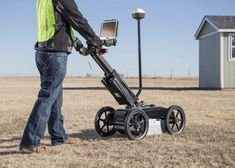
Ground Penetrating Radar (GPR) is a non-destructive investigation technology that uses electromagnetic radar signals to detect changes and objects beneath surfaces. As the radar equipment moves across an area, it sends signals into the ground or structures. These signals reflect differently depending on the materials encountered. Experts then process and interpret the collected data to identify potential underground features.
In regions like Madhya Pradesh, GPR surveys are especially valuable where excavation might disturb roads, floors, concrete structures, landscaping, or existing infrastructure.
Excavating without prior knowledge of underground conditions can lead to unexpected problems, such as hitting unidentified utility lines, pipes, buried structures, or cavities.
Rather than relying solely on old plans or assumptions, project teams can use underground utility detection and subsurface scanning to gather accurate information before beginning work.
GPR investigations assist in:
Thus, GPR becomes an essential part of the pre-construction investigation process.
Underground Utility Detection
GPR locates electrical cables, water pipelines, drainage lines, communication ducts, and other utilities beneath roads, buildings, and open areas, reducing the risk of accidental utility damage and aiding excavation planning.
Concrete Scanning
For renovation or structural modifications requiring drilling or cutting through concrete, GPR identifies reinforcement and internal features, helping contractors choose safe and effective work locations.
Road and Highway Investigation
GPR offers valuable subsurface information about multiple underground layers and utilities without destructive testing, supporting road construction, rehabilitation, utility mapping, and infrastructure development.
Void and Cavity Detection
Subsurface voids can compromise structural stability and safety. GPR detects unusual radar responses that suggest voids or changes, prompting further targeted investigations.
Industrial and Commercial Projects
Industrial sites often have underground pipelines, electrical systems, and foundations. GPR surveys assist with expansion, renovation, maintenance, and new construction by providing detailed subsurface insights.
Overall, Ground Penetrating Radar surveys in Madhya Pradesh play a crucial role in safe, efficient, and informed construction and infrastructure projects.
Selecting an experienced team for your GPR Survey in Madhya Pradesh ensures accurate and actionable results. Professional services offer:
A systematic approach ensures reliable and useful results:
Project Requirement Assessment
Understand the investigation purpose and identify areas to be scanned.
Site Inspection
Evaluate surface conditions, accessibility, existing structures, available drawings, and project needs.
Radar Scanning
Move GPR equipment across planned survey lines or areas to record radar reflections from subsurface features.
Data Processing
Enhance the collected data to facilitate interpretation and highlight significant subsurface responses.
Technical Interpretation
Analyze data to identify utilities, reinforcement, voids, or anomalies.
Reporting
Present findings with appropriate survey outputs and technical documentation aligned with project requirements.
What does GPR detect?
Underground utilities, reinforcement, buried objects, voids, structural features, and subsurface material changes, depending on conditions.
Is GPR surveying destructive?
No, it is generally non-destructive since it requires no excavation during scanning.
Where is GPR useful?
Construction sites, roads, concrete structures, industrial facilities, utility investigations, infrastructure, and renovation projects.
Can GPR locate underground cables and pipelines?
Yes, depending on soil, material type, depth, moisture, and site environment.
Why conduct a survey before excavation?
To gather vital underground information that aids excavation planning and reduces risks.
Understanding what lies beneath a project site is as crucial as what is visible above. Hidden utilities, reinforcements, voids, and obstructions impact construction safety, planning, and timelines.
A professional GPR Survey in Madhya Pradesh offers a non-destructive method for subsurface investigation, supporting construction, infrastructure, industrial, road, and structural projects.
For reliable GPR surveys in Madhya Pradesh, ASurvey combines modern technology with expert knowledge to help clients gain valuable subsurface insights before key construction begins.