Amazing Limited Time Offer !
Call : +91 7771811100, +91 7771811104
Accurate Surveying and Construction


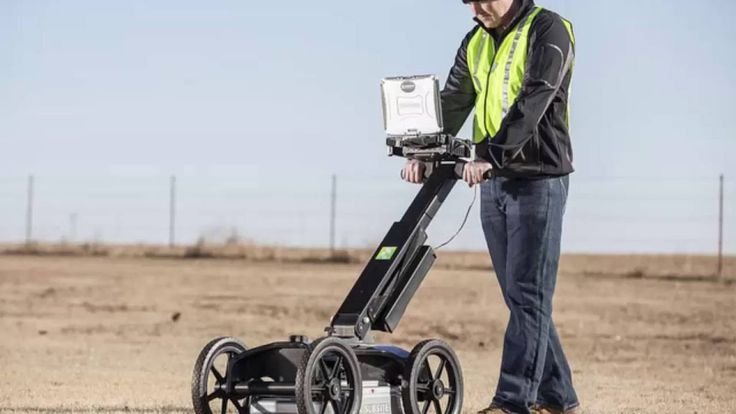
Before starting excavation, construction, renovation, or infrastructure work, it is crucial to understand what lies beneath the surface. Underground cables, pipelines, reinforcement, cavities, buried structures, and other obstructions can pose unexpected challenges if discovered only after work has begun.
A Ground Penetrating Radar (GPR) Survey in Jaipur offers a modern, non-destructive method to investigate subsurface conditions. This technology enables professionals to scan selected areas and identify underground features without relying solely on excavation.
ASurvey provides expert surveying and geospatial solutions for construction, infrastructure, industrial, mining, and engineering projects. Its GPR services support utility detection, structural assessment, construction planning, and subsurface investigation.
Jaipur features extensive residential, commercial, industrial, transportation, and infrastructure development. Construction often occurs near existing buildings, roads, utility networks, and older structures, where complete underground information may be lacking. Existing drawings can be incomplete or outdated.
A professional Ground Penetrating Radar Survey in Jaipur offers critical subsurface data before excavation, drilling, coring, or other activities, helping teams detect:
This information enables safer and better-planned project execution.
Ground Penetrating Radar (GPR) is a geophysical technology using electromagnetic radar signals to examine subsurface materials. GPR equipment sends radar waves into the ground or structures. When waves encounter different materials or objects, some energy reflects back to the receiver. Survey professionals process these signals to identify subsurface features.
This technique is especially valuable for obtaining information while minimizing unnecessary excavation and surface disruption.
Underground Utility Mapping
Road and Pavement Assessment
Structural Investigation of Heritage Buildings and Forts
Real Estate and Construction Site Evaluation
Archaeological and Cultural Site Exploration
This technology plays a vital role in Jaipur’s urban development, heritage conservation, and archaeological exploration.
Difference Between GPR and Geotechnical Investigation:
GPR (Ground Penetrating Radar):
Geotechnical Investigation:
Integration:
Why Choose ASurvey for GPR Investigation?
ASurvey offers both GPR and geotechnical investigation as part of a wider surveying portfolio, ensuring comprehensive subsurface information for construction projects.
What does GPR detect?
GPR can help identify potential underground utilities, reinforcement, buried objects, voids, structural features, and changes in subsurface materials, depending on site and material conditions.
Is GPR a destructive testing method?
No. GPR is generally considered a non-destructive investigation technique because scanning does not require extensive excavation.
Can GPR detect underground cables and pipelines?
GPR can help identify subsurface responses associated with buried utilities. Detection performance depends on factors such as depth, material, soil conditions, moisture, and site environment.
When should a GPR survey be conducted?
It is commonly useful before excavation, drilling, cutting, coring, renovation, utility work, and other activities where hidden subsurface features could affect the project.
Can GPR replace geotechnical investigation?
Not necessarily. GPR and geotechnical investigation serve different purposes. Engineers may use them individually or together depending on project requirements.
As Jaipur balances rapid urban growth with the preservation of its rich heritage, the demand for reliable subsurface investigation tools like GPR continues to rise. A Ground Penetrating Radar Survey in Jaipur offers a non-invasive, accurate, and cost-effective solution for detecting underground utilities, evaluating construction sites, and protecting the city's historic structures.
Whether you are a contractor planning new development, a utility company mapping underground assets, or a conservation team safeguarding a heritage site, investing in professional GPR survey services can help you make informed decisions and avoid costly setbacks. As technology continues to evolve, GPR will remain an essential tool for smart, safe development across Jaipur's unique urban and historic landscape.