Amazing Limited Time Offer !
Call : +91 7771811100, +91 7771811104
Accurate Surveying and Construction


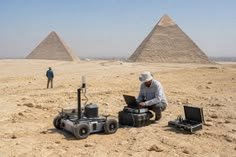
Construction and infrastructure projects often involve hidden elements beneath roads, buildings, industrial sites, and open land. These may include water pipelines, electrical cables, drainage systems, communication ducts, buried structures, cavities, and other subsurface features. Identifying them before excavation helps reduce risks and prevent unexpected delays.
A professional Ground Penetrating Radar (GPR) Survey in Rajasthan offers a modern, non-destructive method to investigate subsurface areas. GPR uses electromagnetic waves to detect changes below the surface, generating radar data that can be processed and interpreted to aid engineering, construction, utility, and infrastructure planning.
Rajasthan has applied GPR technology in underground investigations. For example, official project documentation includes GPR and Total Station surveys to map existing utilities, and the Jaipur Metro project used GPR to analyze subsurface layers and support utility investigations.
Before excavation, contractors and engineers need accurate information about underground conditions. Conventional drawings often miss buried services, especially at older or constantly developed sites.
Unexpected cables or pipelines can halt construction and pose safety risks. Unidentified voids, buried structures, or unusual subsurface conditions also impact excavation and foundation planning.
A Ground Penetrating Radar (GPR) Survey in Rajasthan provides valuable preliminary data on subsurface features, helping project teams identify areas needing further investigation.
GPR can examine suitable ground and structural surfaces for various features depending on conditions and survey goals, including:
Detection effectiveness depends on soil type, moisture, target size and depth, and other site factors. Proper survey planning and expert interpretation are essential for successful results.
| Sector | Application |
|---|---|
| Road & Highway Projects | Pavement thickness assessment, void detection beneath roads |
| Urban Infrastructure | Utility mapping in Jaipur, Jodhpur, Kota |
| Industrial & Solar Projects | Site clearance surveys for factories and solar parks |
| Real Estate & Construction | Foundation checks, rebar detection, soil assessment |
| Heritage Conservation | Non-invasive investigation near forts, havelis, historic sites |
| Government & Municipal Works | Drainage planning, smart city utility documentation |
Rajasthan’s rich architectural heritage makes GPR particularly valuable for archaeological and conservation work, especially near protected structures where excavation is restricted.
Choosing Asurvey.in for your GPR Survey in Rajasthan means:
Underground utility mapping is a key application of GPR. Rajasthan’s urban infrastructure documentation recognizes GPR as an effective method to locate underground utilities, such as water, sewerage, electrical, and other buried services.
For utility mapping, surveys focus on determining the alignment and location of buried services. GPR is often combined with other detection and surveying techniques to enhance site understanding. This approach is especially useful before road excavation, pipeline installation, foundation work, and utility upgrades.
How deep can a GPR survey detect objects?
Depth varies with soil and equipment frequency, but GPR typically detects utilities and structures several meters below the surface.
Is GPR suitable for desert soil conditions?
Yes. Sandy soils common in Rajasthan generally allow good GPR signal penetration, with equipment calibrated per site.
How long does a typical GPR survey take?
Duration depends on site size and complexity; most surveys finish within a few days with prompt report delivery.
Can GPR be used near heritage structures?
Yes. Its non-invasive nature makes it ideal for sites near forts, temples, and protected areas without causing damage.
As Rajasthan expands highways, industrial zones, and urban infrastructure, accurate subsurface data is essential for safe and efficient projects. A professional GPR Survey in Rajasthan provides engineers, contractors, and government bodies with the clarity needed before ground-breaking—saving time, reducing costs, and enhancing safety.
Ready to plan your next project confidently? Connect with Asurvey.in for accurate, reliable GPR survey services tailored to Rajasthan’s unique landscape.
Visit Asurvey.in to learn more about our GPR Survey and other geophysical solutions in Rajasthan.