Amazing Limited Time Offer !
Call : +91 7771811100, +91 7771811104
Accurate Surveying and Construction



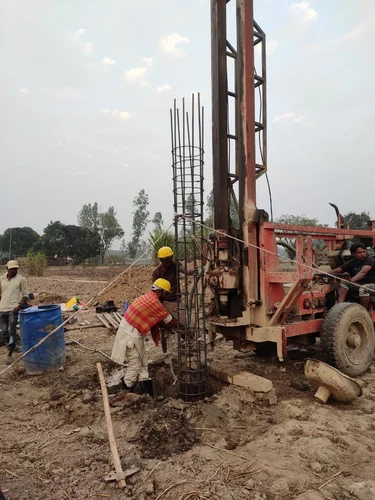
For any construction project to be successful, a solid foundation is necessary. A solid foundation is essential to guaranteeing the longevity and safety of any structure, be it a bridge, commercial complex, industrial facility, residential building, or infrastructure development project. In Bengaluru, Karnataka, Accurate Surveying offers dependable and competent piling work services to meet contemporary construction needs with cutting-edge machinery, knowledgeable personnel, and quality-driven solutions.
With constant expansion in residential, commercial, IT parks, metro projects, and industrial infrastructure, Bengaluru is one of the fastest-growing cities in India. Construction projects need careful foundation planning and execution because of the fast urbanization and changing soil conditions. Strong load-bearing foundations for all kinds of construction projects are the goal of our piling work services.
What is Piling Work? A Comprehensive Guide for Construction and Site Projects
Strong buildings begin with a solid foundation beneath the surface. Before constructing any structure, engineers must ensure the soil can support its weight. When the upper soil layers are weak or unstable, piling work is employed as a critical foundation technique in modern construction.
This guide covers the basics of piling work, its importance, common types of piles, and key considerations for effective piling design. Whether you're starting a new project or exploring foundation and site investigation services, this overview will give you a clear understanding.
Piling work involves driving long, column-like supports called piles deep into the earth. These piles transfer the structure's load to stronger soil or rock layers found deeper underground.
Think of piles as the legs of a building. When the surface soil cannot sufficiently support the structure's weight, piles channel that weight down to more stable ground. Depending on the project requirements, piles are made from materials such as concrete, steel, timber, or a combination of these.
Significance of Piling Work in Construction Projects: Why Strong Foundations Begin Below Ground
The foundation beneath every successful construction project is often unseen but crucial. When the soil is soft, wet, or unable to support heavy loads, even the best designs can fail. Piling work becomes essential by providing deep, reliable support that helps structures stand firm for many years.
Piling involves driving or boring long, strong supports called piles deep into the ground. These piles transfer the structure's weight to firm soil or rock far below the surface, acting like deep legs supporting the building when surface soil falls short. Without piling, heavy structures risk sinking, tilting, or cracking. Piling anchors the load to stable layers, transforming unsafe sites into secure ones.
Ensuring Structural Stability
A building’s strength depends on the ground beneath it. Piles bypass weak upper layers and lock into firm ground, keeping tall buildings, bridges, and industrial facilities stable against wind, traffic, and seismic forces. For example, a high-rise on soft clay soil needs piles driven into denser soil to prevent settlement and damage.
Safely Transferring Heavy Loads
Large structures exert tremendous pressure on soil. Shallow foundations often cannot carry this load, especially on weak ground. Piles transfer loads either by:
How Site Investigation Guides Effective Piling
Good piling starts with knowing what lies beneath. Soil testing, boreholes, and surveys reveal soil types, water levels, and depth of firm ground. This data enables engineers to choose the right pile type, length, spacing, and installation methods, leading to safer, more efficient, and precise foundations tailored to each site.
This ensures heavy loads are safely supported without relying on weak surface soil.
Controlling Settlement and Preventing Damage
Settlement is the slow sinking of structures. Uneven settlement causes cracking, sloping floors, and costly repairs. Piling reduces settlement by transferring loads to stable, compact soil layers, protecting both structure and value. For instance, piles under a warehouse on sandy soil prevent uneven compression.
Enabling Construction on Challenging Ground
Many sites have difficult soil conditions like soft clay, loose sand, high water tables, reclaimed land, or slopes. Piling bypasses weak surfaces to reach strong soil, making construction possible where traditional foundations fail. This flexibility expands building opportunities on otherwise unsuitable land.
Supporting Large Infrastructure Projects
Piling is vital for major projects such as high-rise buildings, bridges, ports, industrial plants, and wind turbines. These face heavy static and dynamic loads, requiring deep, dependable support only piles can provide.
Long-Term Durability
Foundations should last as long as or longer than the structures they support. Quality concrete or steel piles offer decades of stability with minimal maintenance, reducing future repair costs and protecting investments.