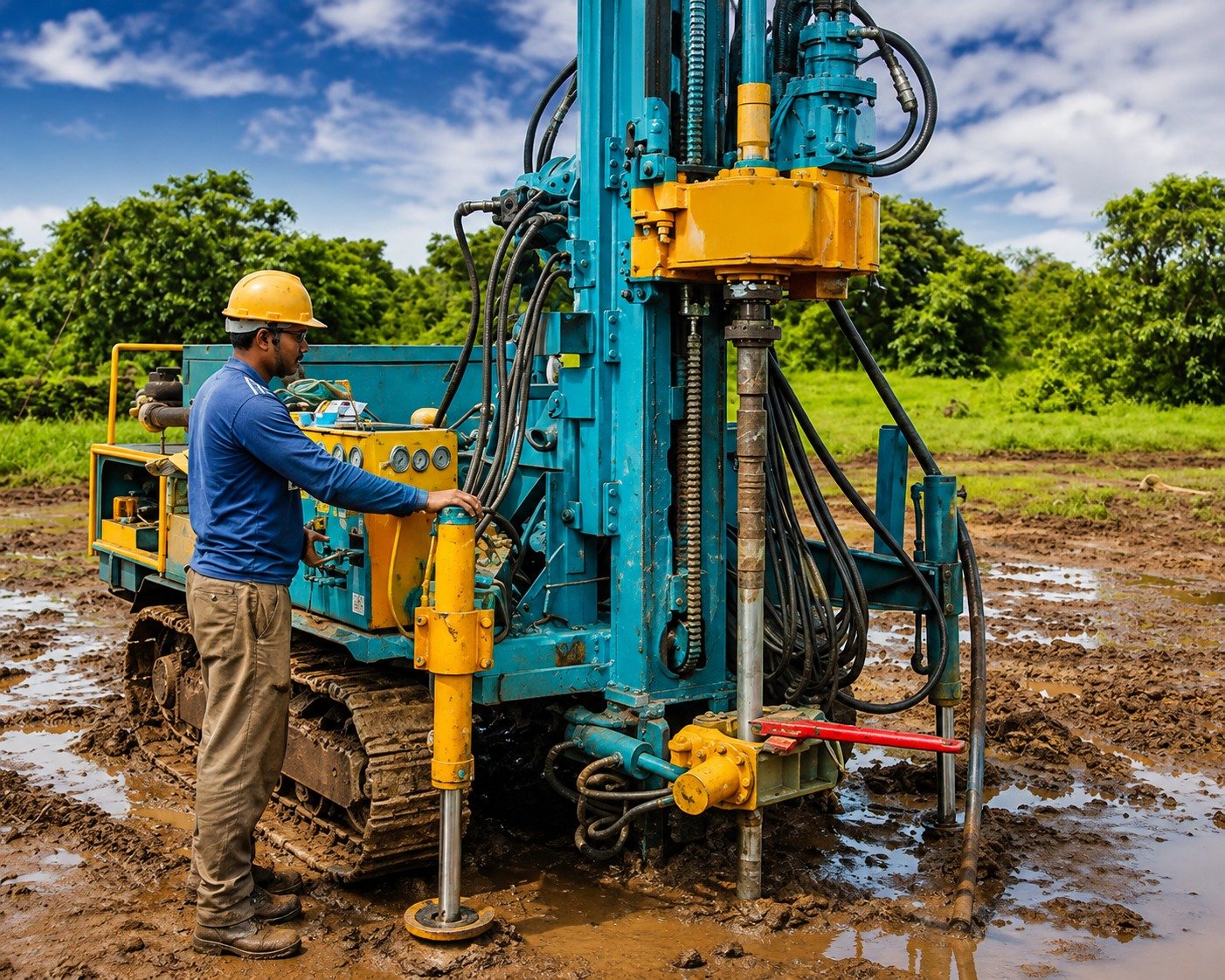
GPR SURVEY GEOTECHNICAL INVESTIGATION PILING IN BHOPAL MADHYA PRADESH
Bhopal has seen significant development across residential, commercial, industrial, institutional, and infrastructure sectors. With ongoing construction of buildings, roads, and facilities, accurate subsurface information is essential before starting major projects. A professional approach combining GPR Survey, Geotechnical Investigation, Piling in Bhopal, Madhya Pradesh provides critical insights into underground conditions. Surface inspections alone cannot detect underground utilities, soil inconsistencies, cavities, or buried structures, which may pose challenges.
By integrating these specialized techniques, engineers and contractors gain a comprehensive understanding of the site. This reduces uncertainties, enhances project planning, and enables the design of foundations tailored to actual ground conditions.
Importance of GPR Survey for Construction
Ground Penetrating Radar (GPR) uses electromagnetic signals to reveal subsurface features without extensive excavation. A professional GPR Survey in Bhopal helps identify underground elements such as:
- Electrical cables
- Water pipelines
- Drainage networks
- Communication lines
- Reinforcement bars
- Concrete structures
- Underground voids
- Buried objects
- Subsurface anomalies
- Existing foundation elements
This non-destructive method is invaluable before excavation, drilling, road cutting, foundation installation, and renovations, minimizing disturbance to existing structures and surfaces.
Geotechnical Investigation for Foundation Design
Soil conditions directly affect foundation performance. A comprehensive Geotechnical Investigation in Bhopal determines key engineering properties including:
- Soil classification and stratification
- Bearing capacity
- Density and shear strength
- Groundwater levels
- Settlement characteristics
- Foundation depth requirements
- Subsurface soil profile
These insights allow engineers to recommend suitable foundation types (isolated, raft, piles, etc.) and predict soil behavior under structural loads, enhancing stability and reducing foundation risks.
How GPR Survey Is Conducted for Piling Projects
- Site Reconnaissance: Understanding surface conditions and access.
- Grid Layout Planning: Marking survey grids over pile areas.
- GPR Data Acquisition: Moving GPR antennas (200–500 MHz) across grids to collect subsurface reflections.
- Data Processing and Interpretation: Using software to identify soil layers, anomalies, and rock depths.
- Correlation with Borehole Data: Cross-verifying GPR findings with borehole logs and Standard Penetration Tests (SPT) for accuracy.
- Reporting and Recommendations: Delivering detailed subsurface profiles, anomaly locations, and pile type recommendations (e.g., bored cast-in-situ, driven, micro piles) tailored to Bhopal site conditions.
This integrated approach supports informed decision-making for safe, efficient piling foundation design and installation.
Benefits of Geotechnical Investigation in Bhopal
- Better Foundation Planning: Provides site-specific soil data for choosing appropriate foundation systems.
- Improved Construction Safety: Early detection of soil and groundwater conditions aids effective activity planning.
- Reduced Foundation Risks: Minimizes uncertainty and addresses ground challenges before construction.
- Cost-Effective Engineering: Prevents costly foundation modifications and corrective work.
- Better Structural Performance: Designs foundations based on actual soil conditions and load requirements.
Importance of Pile Testing
- Ensures pile quality and performance through tests like:
- Pile Integrity Test
- Static and Dynamic Load Tests
- Pile Dynamic Test
- Cross Hole Sonic Test
- Low Strain Pile Testing
- Other specialized methods
- Validates pile integrity, load response, and installation quality.
- Testing methods are chosen by qualified professionals based on design, pile type, site, and project specs.
- Combining piling with testing maintains foundation quality and engineering compliance.
Applications of GPR, Geotechnical, and Piling Services in Bhopal
These services support construction and infrastructure projects including:
- Residential and commercial buildings
- Industrial facilities and manufacturing plants
- Roads, highways, bridges, and flyovers
- Warehouses, hospitals, educational institutions
- Government buildings and utility projects
- Infrastructure developments and redevelopment projects
Professional subsurface investigation benefits both new and existing construction projects.
Integrated Approach to GPR Survey, Geotechnical Investigation, and Piling
- Accurate Site Information: Begin by identifying investigation needs and understanding existing site conditions.
- GPR Survey: Use Ground Penetrating Radar to detect underground features and utilities non-invasively.
- Geotechnical Assessment: Analyze soil layers, groundwater, and engineering properties to inform foundation design.
- Foundation Selection: Choose appropriate foundation systems based on collected data.
- Piling Planning: For deep foundations, plan pile installation aligned with engineering requirements.
- Pile Testing: Conduct tests to verify quality and performance of installed piles.
This integrated method makes GPR Survey Geotechnical Investigation Piling in Bhopal, Madhya Pradesh a vital solution for modern construction and infrastructure projects.
Conclusion
As Bhopal grows as a major urban and infrastructure center, precise subsurface data is crucial before piling work. A comprehensive GPR survey combined with geotechnical investigation detects soil variability, buried utilities, voids, and groundwater conditions, enabling safer and cost-efficient pile foundation designs.
When paired with conventional methods like boreholes and Standard Penetration Tests (SPT), GPR offers a thorough, non-invasive understanding of subsurface conditions.
Whether constructing residential towers, flyovers, or industrial facilities, investing in this integrated approach ensures long-term structural safety and minimizes unexpected foundation risks throughout the construction lifecycle in Bhopal, Madhya Pradesh.