Amazing Limited Time Offer !
Call : +91 7771811100, +91 7771811104
Accurate Surveying and Construction



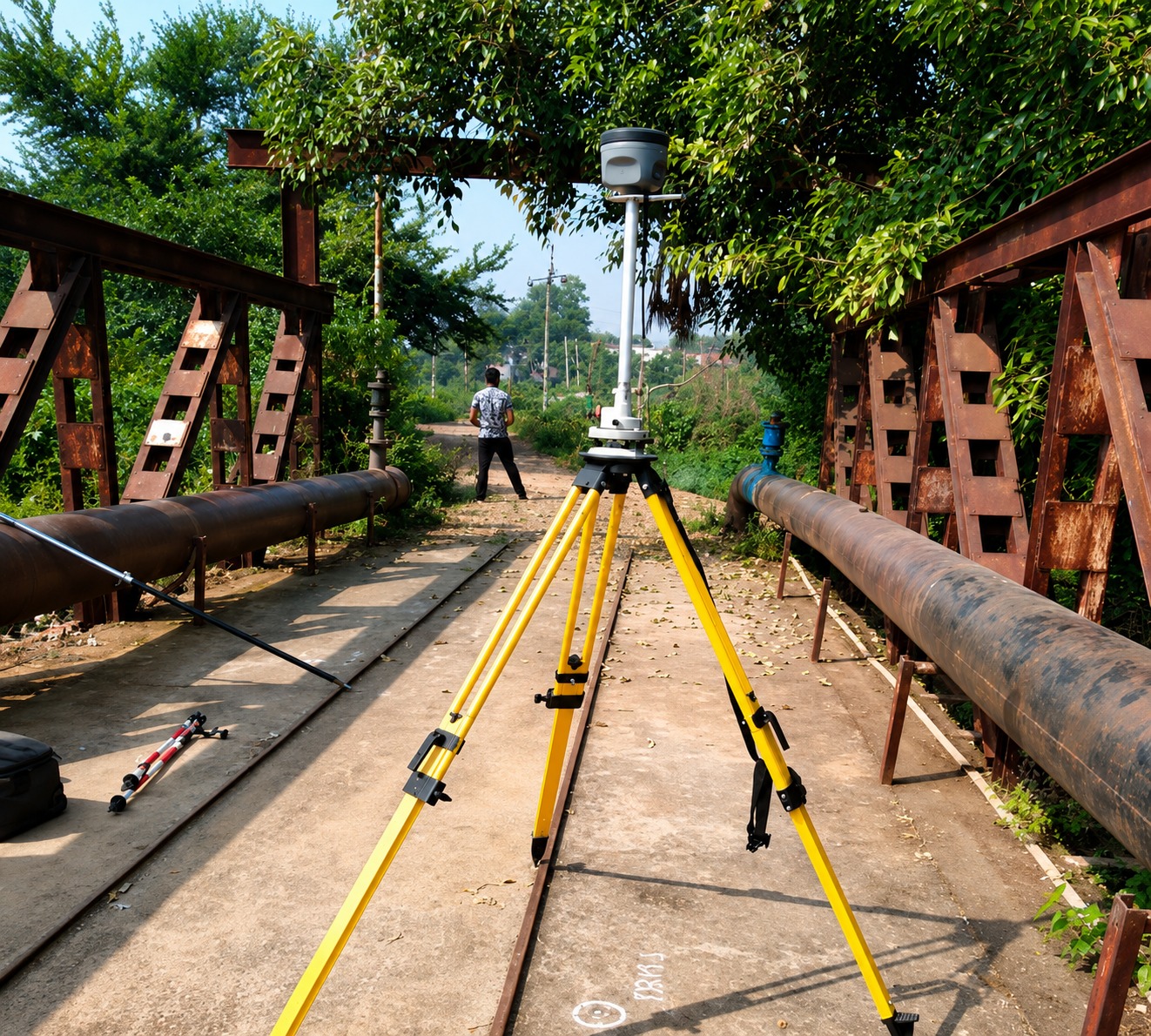
Nagpur, famously known as the "Orange City," is rapidly emerging as a key logistics, industrial, and infrastructure hub at India’s geographic center. With ongoing metro rail expansions, the Multi-Modal International Cargo Hub and Airport (MIHAN) project, industrial townships, and residential developments, Nagpur's skyline is transforming swiftly. However, the subsurface conditions—characterized by basaltic rock, black cotton soil, and varying degrees of weathering—demand meticulous pre-construction planning.
For this reason, Ground Penetrating Radar (GPR) surveys for geotechnical investigation piling at Nagpur Maharashtra have become an indispensable part of the pre-construction process for engineers, developers, and infrastructure authorities in Nagpur, Maharashtra. This guide explains what GPR survey entails, why Nagpur’s unique geology necessitates it, the various survey types available, a detailed step-by-step procedure, and a comparison with traditional exploration methods.
Ground Penetrating Radar (GPR) is a non-destructive geophysical technique that transmits high-frequency electromagnetic pulses into the ground and records the signals reflected by subsurface materials. Differences in soil density, moisture, buried objects, and rock boundaries produce distinct radar signatures, which expert geophysicists interpret to create an accurate underground map—without any excavation.
A standard GPR survey can detect:
Thanks to its speed, repeatability, and non-invasive nature, GPR is a standard preliminary step before detailed geotechnical investigation and piling design in Nagpur’s growing construction sector.
Nagpur is located on the Deccan Trap basalt formation, often overlain by expansive black cotton soil—a soil type known for significant volume changes with seasonal moisture variations. This combination poses unique foundation challenges, making assumptions about bearing capacity or rock depth risky.
A well-executed GPR survey for geotechnical investigation and piling in Nagpur helps address key regional issues:
Many construction sites require deep foundations due to weak surface soils. Piling investigation determines the most suitable pile type, depth, and load-bearing capacity by evaluating:
Accurate piling investigation helps reduce construction costs, prevents structural settlement, and enhances building safety.
Choosing professional services in Nagpur offers:
ASurvey delivers engineering investigation services for:
Our engineers utilize cutting-edge equipment for precise investigation:
This modern equipment ensures accurate field measurements and dependable engineering reports.
Pre-Survey Site Assessment
Review of drawings, utility records, and site access.
Grid Layout Planning
Establish a scanning grid covering the proposed piling zone.
Field Data Acquisition
Move GPR antennas across the grid to capture radar reflections at various frequencies and depths.
Signal Processing
Use specialized software to filter noise and enhance subsurface features.
Radargram Interpretation
Geophysicists identify utilities, soil transitions, basalt depth, and voids.
Cross-Verification with Boreholes
Targeted boreholes validate GPR data and provide soil samples for lab analysis.
Geotechnical Investigation Reporting
Compile findings into a detailed report addressing subsurface conditions relevant to piling.
Integration with Piling Design
Engineers finalize pile type, spacing, depth, and installation methods based on the report.
Best Practice: Use GPR as a complementary tool alongside conventional geotechnical exploration rather than a standalone replacement for any piling project in Nagpur, Maharashtra.
Q1: How deep can a GPR survey detect subsurface features in Nagpur?
GPR typically detects features from less than a meter to several meters deep, depending on soil conditions and antenna frequency. Clay-rich black cotton soil can reduce effective penetration depth.
Q2: Is GPR survey mandatory before piling in Nagpur?
While not universally mandatory, GPR is strongly recommended due to Nagpur’s variable basalt weathering depths and expansive soil conditions.
Q3: Can GPR replace boreholes entirely?
No. GPR helps guide and reduce the number of boreholes but cannot replace them. Physical soil samples remain essential for laboratory classification and bearing capacity testing.
Q4: How long does a typical GPR survey take in Nagpur?
Most piling-zone surveys are completed within one to a few days, depending on site size, followed by data processing and report generation.
Successful construction projects begin with reliable site investigation. GPR Survey, Geotechnical Investigation, and Piling services in Nagpur, Maharashtra provide vital insights into underground conditions, soil characteristics, and foundation requirements, enabling engineers to make well-informed decisions.
ASurvey delivers comprehensive GPR surveys, geotechnical investigations, soil testing, borehole drilling, and piling investigation services throughout Nagpur and Maharashtra. With experienced professionals, advanced technology, and detailed engineering reports, we support clients in completing their projects safely, efficiently, and within budget.
For your next residential, commercial, industrial, or infrastructure project in Nagpur, trust ASurvey for dependable site investigation services and expert engineering solutions.